
Managing Large-Scale Community Association Operations

Large communities need coordinated planning, clear priorities, and budgets that account for future needs. Continuing education for managing large-scale community association projects can help managers balance project decisions with daily operations and residents’ needs.
Major projects can affect shared amenities, services, and residents across multiple neighborhoods. Managers need to look beyond immediate costs, communicate clearly, and plan for ongoing maintenance. Professional learning can support these responsibilities.
This article explains how large-scale communities operate, how boards can define project scope and priorities, and how budgets and reserve studies support long-term planning. It also covers how contingency planning prepares teams for disruptions and supports informed decisions throughout a project.
Key Takeaways
- Define what a project includes and whether it’s essential or optional before seeking quotes or announcing plans.
- Use asset condition, community needs, and project impacts to set priorities and keep operations running during delays or vendor issues.
- Build long-term project budgets around reserve-study findings, and include a 10-15% contingency for unexpected costs.
- Coordinate financial reporting, resident updates, and ongoing maintenance so project decisions remain clear and new assets stay cared for.
- Florida community association managers can use continuing education to build knowledge relevant to complex community operations.
Financial management and association operations
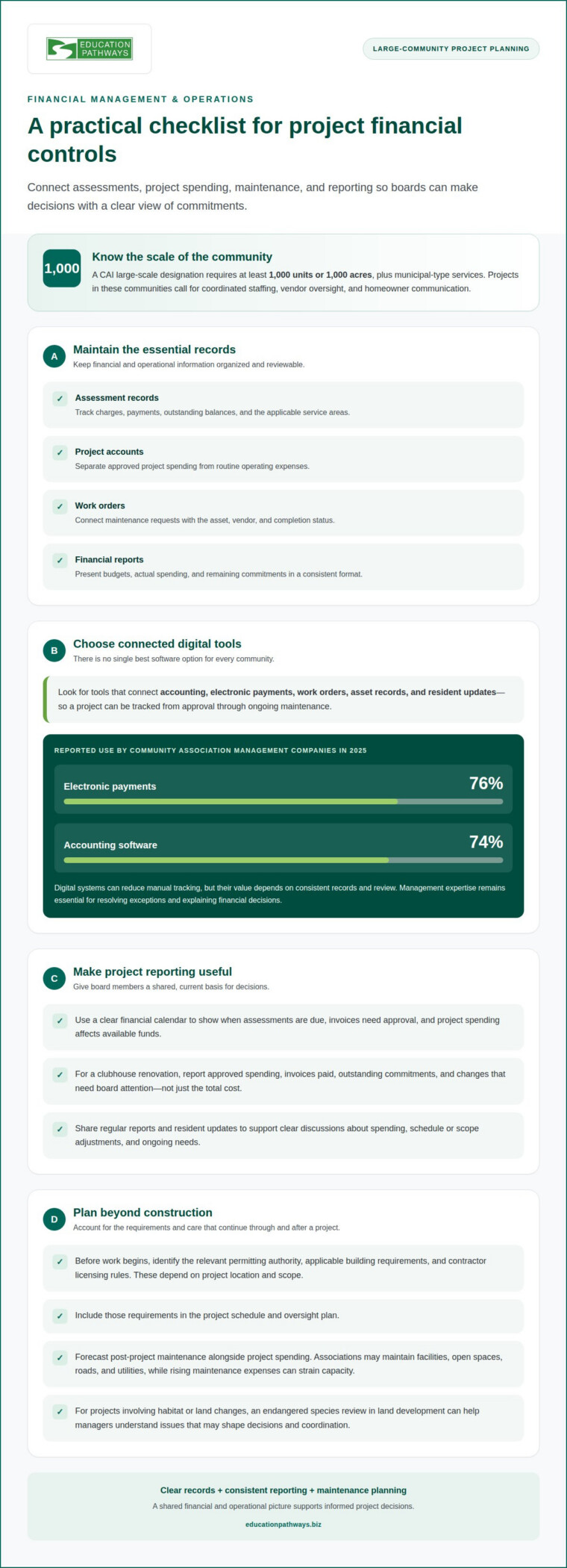
Financial management connects assessment collection, operating expenses, maintenance, and project reporting. In a large association, managers track income and commitments across shared assets, such as roads, recreation facilities, and stormwater systems. A clear financial calendar shows the board when assessments are due, invoices need approval, and project spending affects available funds.
What project management software is best for HOAs and community associations? There is no single best option for every community. Look for tools that connect accounting, electronic payments, work orders, asset records, and resident updates, so managers can track a project from approval through ongoing maintenance.
Digital systems can reduce manual tracking, but their value depends on consistent records and review. In 2025, electronic payments were used by 76% of community association management companies, and accounting software by 74%. These tools can support timely assessment collection and reporting, while management expertise remains essential for resolving exceptions and explaining financial decisions.
- Assessment records: Track charges, payments, outstanding balances, and applicable service areas.
- Project accounts: Separate approved project spending from routine operating expenses.
- Work orders: Connect maintenance requests with the asset, vendor, and completion status.
- Financial reports: Present budgets, actual spending, and remaining commitments in a consistent format.
For example, a board reviewing a clubhouse renovation needs more than the total cost. A useful report shows approved spending, invoices paid, outstanding commitments, and changes that need board attention. Regular reporting keeps residents informed and gives decision-makers a shared basis for discussing schedule or scope adjustments.
What permits, building codes, and contractor licensing requirements apply to community association projects? They depend on the project’s location and scope. Before work begins, the project team should identify the relevant permitting authority, applicable building requirements, and contractor licensing rules, then include them in the schedule and oversight plan.
Financial controls should also account for post-project maintenance. The U.S. Government Publishing Office notes that HOAs often maintain planned unit development facilities, open spaces, roads, and utilities, while rising maintenance expenses may strain an association’s capacity. Forecasting these obligations alongside project spending helps boards understand the full operational impact.
Environmental and land-development considerations can affect planning, too. For projects involving habitat or land changes, an endangered species review in land development can help managers understand issues that may shape project decisions and coordination.
Strong financial management brings together records of assessments, vendor commitments, maintenance needs, and board reports. When accounting and operations share accurate information, the association can explain decisions clearly, address emerging issues earlier, and measure project performance against approved plans.
Community association property managers typically oversee daily operations, including maintenance coordination, resident communication, compliance, and financial reporting. Digital portals, reports, and community updates can help associations share project financial information with homeowners and support clearer discussions about spending and ongoing needs.
Capital improvement plans can guide the maintenance and enhancement of community assets over time, while community management technology can integrate work-order and asset-management systems to support daily operations. Professional community association management fees are typically 8-15% of assessments, so boards can consider management costs alongside the services and operational support provided.
What are Large-Scale Communities, and How are They Managed?
For a CAI large-scale designation, a community needs at least 1,000 units or 1,000 acres and municipal-type services. Projects in these communities require coordinated staffing, vendor oversight, and communication with homeowners.
Project Timelines and Vendor Oversight
A project timeline assigns responsibilities, milestones, and communication points to the people overseeing the work. This structure helps managers identify conflicts before they disrupt services or delay construction.
For example, a road project may depend on drainage work finishing first. Managers can coordinate vendors, track milestones, and share weekly updates with homeowners. On-site managers and maintenance staff can monitor access, common-area conditions, and service interruptions—such as coordinating machinery haulage or vehicle relocation with professional towing and transport operators like donewrighttowing.com.au to keep roadways unobstructed. Quality checks and performance monitoring help the board address incomplete work against the project plan.
Approvals and Member Voting
Board approval and member voting depend on the association’s governing documents and applicable state law. The board should identify the required decision process before authorizing work, so homeowners understand which decisions belong to the board and which require a member vote.
Project records should capture the proposal, decision, assigned responsibilities, and any required member action. Clear meeting procedures help document how decisions were made. For practical guidance on board meeting processes, see meeting essentials for homeowners associations.
Managing Delays and Unexpected Costs
Delay planning sets out how the team will respond when weather disrupts work, a vendor fails, or costs change. A written contingency plan gives each person clear responsibilities and keeps project documents accessible.
If a contractor stops communicating, the manager can document missed milestones, notify the board, and explain the schedule impact to residents. The team can then review contract terms and decide how to proceed. Recording the decision and revised timeline helps prevent conflicting updates.
Vendor selection should consider relevant experience, proposed scope, schedule, communication practices, and the ability to meet project requirements. The lowest bid alone may not cover the full scope or oversight needs. A written construction contract should clearly set out the scope, milestones, reporting expectations, and approval process.
Risk planning also considers how construction may affect shared spaces, resident access, and ongoing services. The association should clarify who handles each responsibility, document changes, and keep project records available to decision-makers. These controls help the board respond to concerns while maintaining oversight and accountability.
Regular updates build trust when they explain completed work, upcoming disruptions, and schedule changes. A newsletter, email, or bulletin board notice can reach homeowners through familiar channels. Invite questions and provide a contact route for project concerns, so residents know where to direct them.
Budgeting for contingencies and using reserve studies
A reserve study gives the HOA board a basis for forecasting major repair and replacement costs. Pairing that outlook with a project budget helps the board plan spending, rank needs, and prepare for unexpected work.
Project planning should consider costs over the next decade, not just the current construction phase. A reserve study can help forecast long-term costs and prioritize spending by showing which assets need attention and when. For example, if a community is considering a road upgrade alongside recreation-area repairs, the study can help compare expected timing and funding needs. The board can then weigh asset condition, service impact, and available resources.
Build a contingency into the project budget. HOA project budgets should include a 10-15% contingency for unexpected costs. The reserve is a defined planning allowance, not a separate project scope. If drainage work uncovers additional repairs, the board can assess the change against the approved contingency and document its decision. If the added work exceeds that allowance, the board can reconsider timing, scope, or funding before authorizing further spending.
Match funding to the project and its timing
Community associations can fund large projects through reserve funds, assessments, or loans. Reserves use money set aside for future needs; assessments collect additional funds from owners; loans spread repayment over time. The HOA board weighs project urgency, reserve balances, assessment structures, governing documents, and repayment obligations when choosing an approach.
For a project serving only one neighborhood, the budget should account for differences in service areas. Assessments may differ when residents receive different services, and large-scale community budgets can reflect reserve requirements across neighborhoods. This approach connects project costs with the areas and assets involved, rather than treating every expense as a community-wide obligation.
Financial management improves when the board connects the reserve study, project schedule, and funding plan. A useful budget separates:
- Expected project costs from contingency funds.
- Reserve contributions from funds available for current work.
- Costs shared across the community from those tied to a service area.
- Construction spending from future maintenance obligations.
For instance, an amenity renovation may require both immediate construction funding and ongoing upkeep. Including both in the planning process shows the board the longer-term financial impact. Reviewing that outlook during annual budget planning can also reveal competing needs before a project commitment limits other options.
Reserve studies are planning tools, not automatic spending decisions. The HOA board still needs to compare the study’s projections with current project information and community priorities. This disciplined approach helps preserve reserves for future needs while giving major projects a clear funding structure.
Defining project scope and priorities
Before seeking quotes or announcing a project, HOA boards should define its scope and decide whether the work is necessary or optional. That early decision gives vendors a consistent description to price and residents a clear basis for understanding the proposal.
Start with the asset and the problem. For a common area with recurring drainage issues, describe the affected location, observed conditions, and work the association is considering. Separate the required outcome, such as restoring drainage function, from optional additions, such as changing nearby landscaping. This helps the board compare bids for the same work rather than competing interpretations.
Next, use available property information and resident input to assess priority. An inspection record can show where a sidewalk needs attention; resident reports can identify access problems or recurring disruptions. Consider how each project affects shared services, ongoing maintenance, and other planned work. A drainage repair affecting a retention pond, for example, may need coordination with landscaping or nearby common-area improvements.
A practical scope document can capture the key decisions:
- Purpose: State the condition or community need the project addresses.
- Location: Identify the buildings, roads, amenities, or common areas involved.
- Work included: Describe the expected deliverables and relevant exclusions.
- Operating impact: Note access changes, service interruptions, or maintenance needs.
- Decision points: Identify which changes require board review before work proceeds.
These details help boards compare proposals consistently. If one vendor includes replacement materials while another proposes repairs, make the difference clear before selecting a proposal. The board can then clarify the scope, request comparable pricing, and understand how each option addresses the original need.
Prioritization also means distinguishing urgent asset needs from improvements that can wait. Regular trail and sidewalk inspections help identify accessibility and usability concerns. Drainage systems and retention ponds need coordinated management of water across the development. Landscaping or amenity upgrades may still matter, but their timing should be weighed against current maintenance demands and resident impact.
During planning, track how each proposed change affects the original scope, schedule, and responsibilities. For example, if an inspection reveals additional sidewalk sections that need work, document the added areas and the board’s decision before revising the project plan. A consistent record helps residents understand the reason for a change and gives future boards useful project history.
A clear scope gives the association a useful reference from initial planning through completion. It keeps project challenges visible, supports informed decisions, and makes it easier to assess whether the finished work meets the board’s stated purpose.
For example, if an inspection reveals additional sidewalk sections that need attention, the board can document their locations, assess whether they belong in the current project, and decide whether to revise the scope or handle them separately. Making that choice explicit preserves clear comparisons among proposals and makes any effect on access, maintenance, and timing easier to review.
Portfolio growth was the top priority for 92% of community association management companies in 2025. Boards can keep their own project decisions grounded in the community’s needs by defining the intended outcome, identifying necessary work, and weighing proposed additions against maintenance demands and resident impact.
Management complexity and community size
Community size shapes how managers coordinate people, services, and decisions. A qualifying large-scale community association has a single, contiguous community, an on-site, full-time manager, and an annual operating budget of at least $2 million. These features bring daily operational demands closer to those of a small municipality.
Master-planned developments add another layer of coordination. A master association may oversee several sub-associations, each with its own board, priorities, and governing documents. A shared road project, for example, may affect several neighborhoods, while a pool upgrade may serve just one. Managers need to distinguish community-wide responsibilities from neighborhood-specific needs.
That distinction matters for assessments and service delivery. Where residents receive different services, assessments may differ between service areas. Clear records help explain which association maintains a road, open space, or recreation facility. They also make it easier to route resident requests to the right team, so maintenance responsibilities do not fall between associations.
Staffing often reflects the scale and spread of operations. A large community may use on-site managers, maintenance personnel, and lifestyle coordinators, each with defined responsibilities. For example, maintenance staff can report a damaged path, while the manager coordinates inspection, repair planning, and updates to the appropriate board.
Volunteer committees can also help manage workloads. A landscape committee might gather resident feedback and identify priority areas, while management handles vendor coordination and board reporting. Committees bring local knowledge, but clear authority boundaries keep decisions with the board or staff members responsible for them.
Useful management systems connect work orders with asset records. If a drainage issue recurs near a neighborhood entrance, linked records can show the location, previous work, and current status. That history supports consistent follow-through and helps managers identify patterns across roads, ponds, trails, and other shared assets.
Boards can make information accessible through digital portals, reports, and community updates. Residents should be able to find project notices, meeting materials, or maintenance updates without relying on informal messages. Consistent communication also helps sub-associations understand how shared projects affect their residents and operations.
Complexity increases when projects compete for staff attention or disrupt routine services. A dedicated project manager or engineer may be appropriate when timelines slip, vendor communication becomes inconsistent, resident concerns grow, or daily operations suffer. Suitable expertise can keep project coordination distinct from routine community management.
After major work, managers should document lessons learned and assign ongoing asset maintenance. A completed recreation-area upgrade, for instance, still needs someone responsible for inspections, service requests, and upkeep. Recording those responsibilities gives future boards and managers a useful reference and helps keep the improvement accessible to residents.
Education Pathways: Florida Community Association Manager (CAM) CE
Education Pathways offers Florida Community Association Manager (CAM) CE for managers maintaining their continuing education. The course format is self-paced and 100% online, allowing learners to complete coursework around work schedules. Certificates are issued instantly and reported to the appropriate licensing boards.
For managers responsible for complex operations, continuing education can complement practical experience with ongoing professional learning. Education Pathways offers Florida Community Association Manager continuing education to support your learning while you balance community responsibilities.
Contact Education Pathways to discuss Florida Community Association Manager continuing education.
Put your next project plan into motion
Use the next planning cycle to turn project experience into a clearer decision framework. Record which approvals, communication practices, and coordination methods helped your community move forward, then apply those lessons when new needs arise. Continuing education can help strengthen the judgment these responsibilities require.
Education Pathways, LLC offers Florida Contractor Continuing Education and Florida Community Association Manager (CAM) CE. For Florida community association managers, continuing education can support professional learning alongside operational responsibilities.
Take the next step in your professional development. Contact Education Pathways, LLC to discuss continuing education options relevant to your work. With a thoughtful plan and ongoing learning, you can approach future community projects with greater clarity and confidence.
Frequently Asked Questions
What are best practices for managing large-scale community association projects?
Assign an accountable project lead and keep a decision log of approvals, changes, and unresolved issues. For a project spanning several neighborhoods, map who owns each decision and how concerns reach the board. After completion, document lessons learned, including what caused rework or confusion. This record gives future managers useful context and helps the association improve its approach without relying on informal recollections.
How should a community association plan and prioritize major capital projects?
Compare proposed projects by asset condition, service impact, resident needs, and alignment with long-term plans. For example, an aging amenity with recurring service interruptions may warrant earlier attention than a cosmetic upgrade. Ask committees to gather focused resident input, then consider that feedback alongside inspections and maintenance records. The board can record why a project ranks where it does, making later adjustments easier to explain and assess.
What risks and insurance considerations affect large-scale community association projects?
Weather delays, vendor failure, cost changes, and construction impacts on shared spaces, resident access, and ongoing services can disrupt a project. Prepare a contingency plan with assigned responsibilities, clear communication, and accessible records; the material provides no specific insurance considerations.